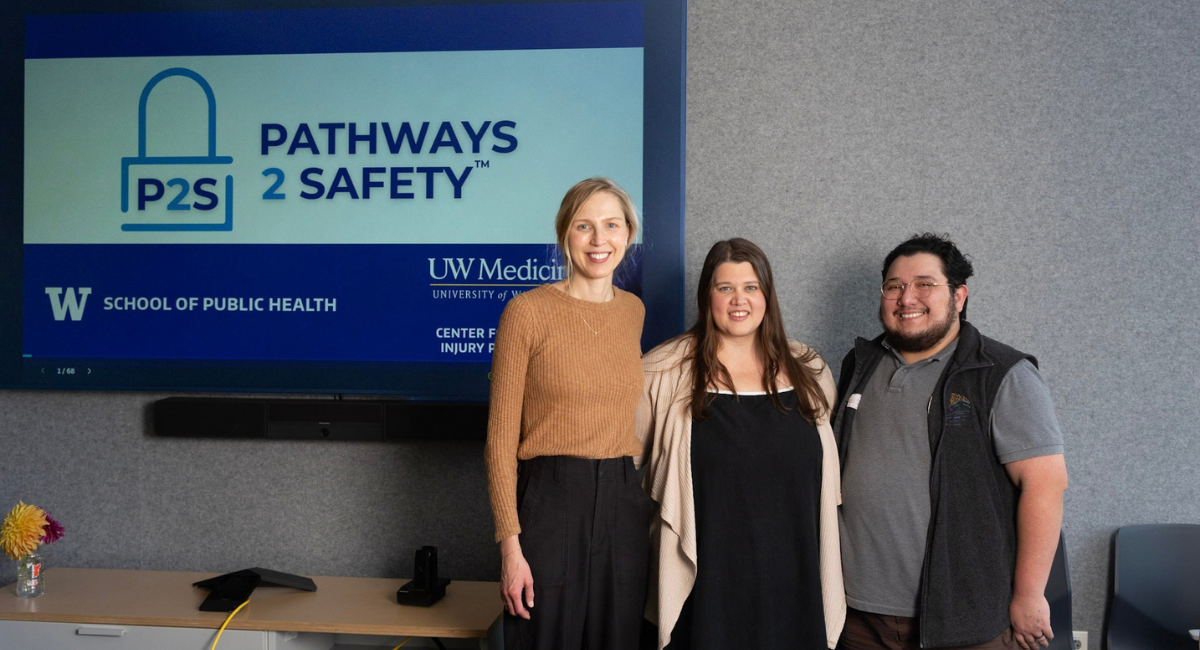
Putting 10 minutes between someone who is in crisis and their firearm can save a life.
Research shows that’s about how long it takes someone to act on a decision to attempt suicide, which is why creating that time and space is a critical goal of Pathways 2 SafetyTM, a University of Washington program that protects people from firearm suicide.
The program works directly with community behavioral health providers who are on the frontlines of supporting patients experiencing mental health crises. These providers aren't traditionally trained on how to talk to patients who are at risk of suicide about firearms, so Pathways 2 Safety fills a critical gap by teaching them how to have conversations and provide resources to their patients.
Now, with a new $500,000 gift from the Erick Shirley Foundation for Mental Health, Pathways 2 Safety can expand this work by bringing its program to new community behavioral health agencies and adapting the training for other providers who work with patients in crisis. Pathways 2 Safety has already trained 600 providers and students with the help of the Foundation's initial gift of $250,000.
“We are incredibly excited and very grateful that we're going to be able to expand Pathways 2 Safety,” said Kelsey Conrick, a postdoctoral scholar at the Center for Firearm Injury Prevention who led the creation of the program. “We’ve had such a positive response from those who have taken the program, and this gift means we can build conversations about firearms into everyday clinical practice on a much larger scale, giving more providers the tools to save lives.”

The gift will subsidize the training's cost for behavioral health agencies. It will expand the program to new behavioral health organizations, including adapting it for mobile crisis response. The gift will also support current staffing and new collaborators for this interdisciplinary work.
Firearms are the most common method of suicide deaths in the U.S. because of how lethal and accessible they are. Annually, about 27,500 people die of firearm suicide in the U.S., which is significantly higher than other methods. Temporarily putting time and space between someone and their firearm is an effective suicide prevention measure because people rarely change the method they’ve chosen to die if they fail to access it during a moment of suicidality.
Conrick notes that this program is not about taking away guns, but rather providers and patients collaborating to temporarily reduce access during times of mental health crises. Something that makes Pathways 2 Safety unique is training providers to understand the cultural and social importance firearms have in some communities. Providers learn how to build safety plans that align with their patients' goals, which can include temporarily storing their guns with a trusted source, or providing secure storage tools like lock boxes and cable locks that take time to undo.
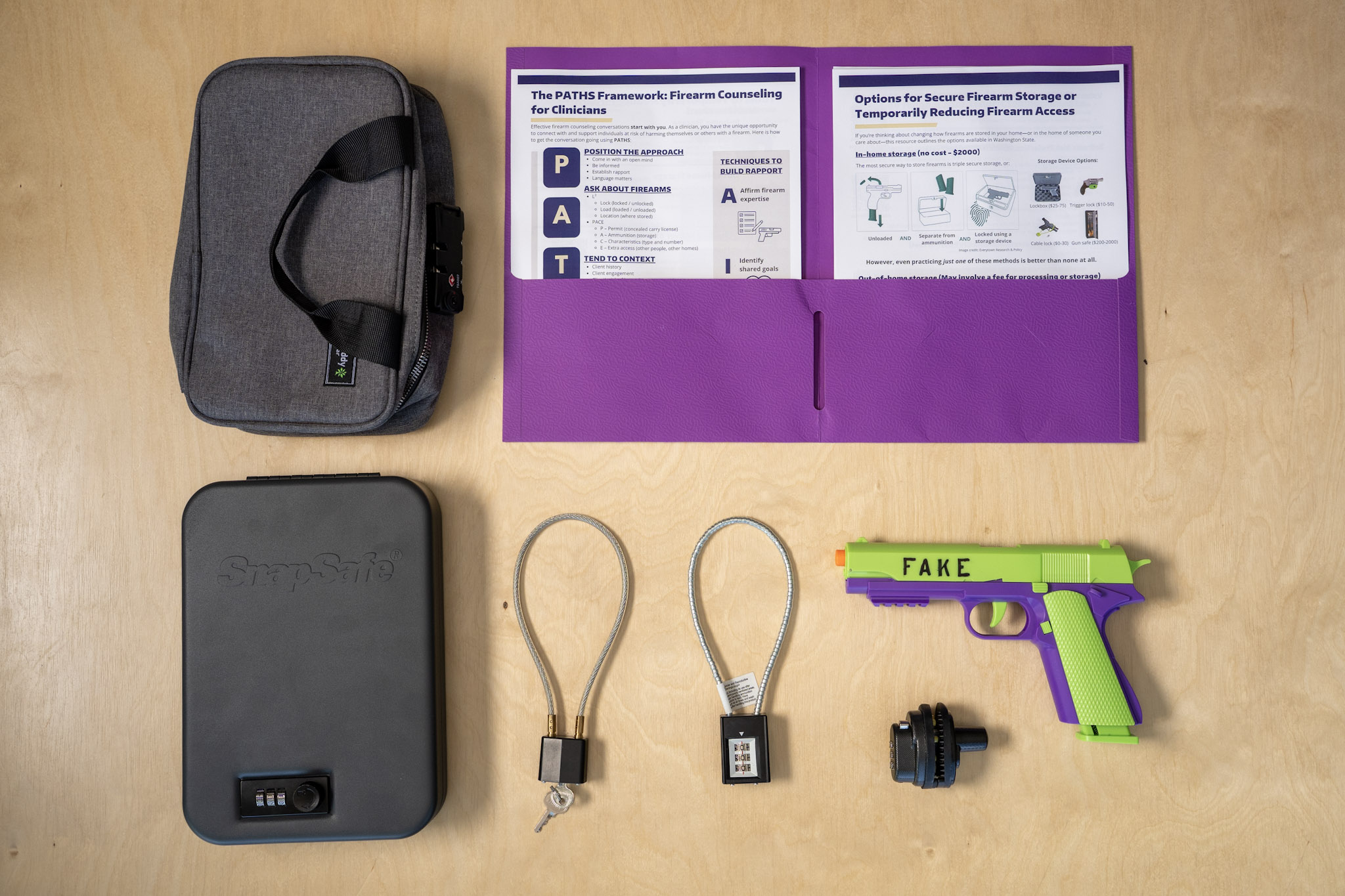
“Firearms can be deeply personal for people in a way that other means of suicide are just not,” Conrick said. “And so that can make it really challenging to have conversations about firearms. That's one of the reasons we created this program.”
Conrick and her fellow researchers are currently focused on measuring how well Pathways 2 Safety is supporting health providers with all the tools needed to help their patients. But in future years, Conrick wants to measure how the program saves lives.
“The overwhelming majority, 90% of people, who survive a suicide attempt, do not go on to die by suicide later,” Conrick said. “So if we can create time and space between them and the firearm, if we can give them time to receive support, it's very unlikely that they're going to go on to die by suicide later.”
For Community Behavioral Health Agencies interested in receiving Pathways 2 Safety training, reach out to p2s@uw.edu.
If you or someone you know is struggling or in crisis, help is available. In the U.S. and Canada, call or text 988 or visit 988 Lifeline.