A person who spits in a tube and ships it off to a genetic testing company may be eager to discover their ancestral heritage or learn if they’re at risk for certain diseases. What they might not be prepared for is unintentionally learning they’re not biologically related to one of their parents.
As genetic testing has boomed over the past decade, this situation is becoming increasingly common. Forty million Americans have done direct-to-consumer genetic testing, such as through an at-home test kit. It’s estimated that 10 percent of those have discovered mistaken parentage. How genetic testing companies are (or aren’t) preparing their customers for this discovery, and the impact this has on those people, is a topic that fascinates University of Washington doctoral student Betty Cohn.
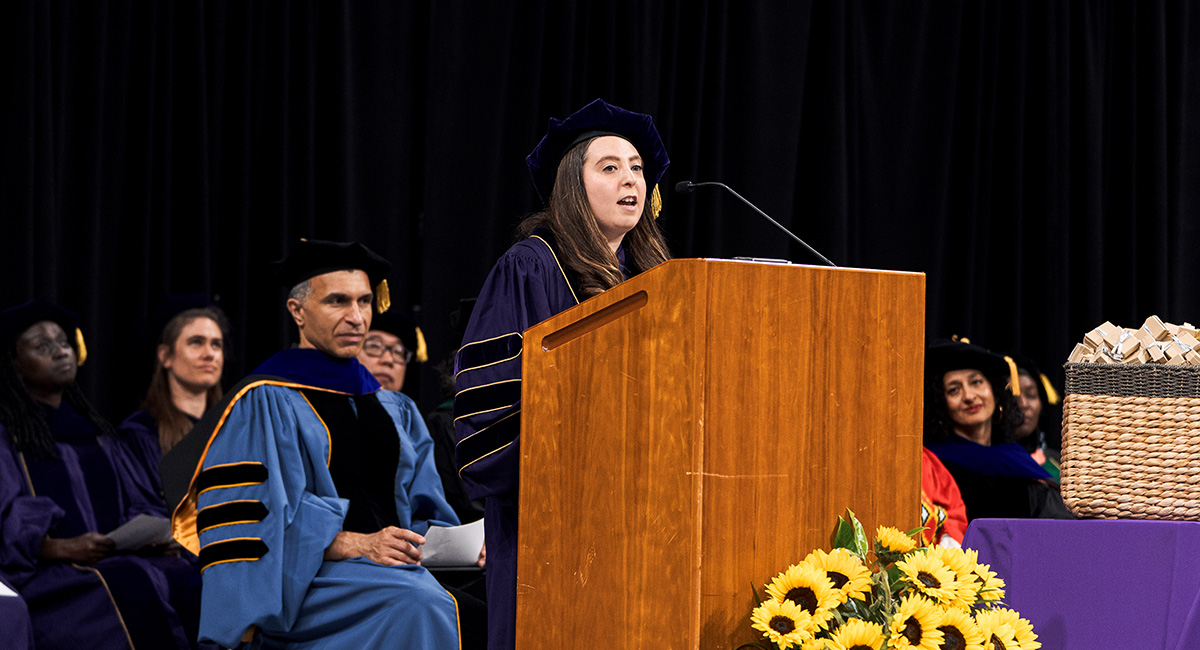
Cohn, who graduates this spring, has been a student in the School of Public Health’s Institute for Public Health Genetics. She’s interested in researching the ethical issues surrounding emerging biotechnologies, from using polygenic risk scores in embryo selection to the ethical implications of studying brain organoids. For her outstanding work, Cohn was awarded the Gilbert S. Omenn Award for Academic Excellence, one of the most prestigious School-wide recognitions for master’s and doctoral students.
Cohn’s dissertation looks at how people are prepared and then supported after genetic testing when they discover one of their parents isn't biologically related to them, including how social media plays a role in emotional support. She said direct-to-consumer testing companies provide very little information or resources around this topic. But this is a big issue, as the findings can cause significant emotional impact on people discovering these results.
“People don't think this happens often, but it happens to millions of people,” Cohn said. “This is a public health problem. We have to make sure consumers are prepared and supported afterwards.”
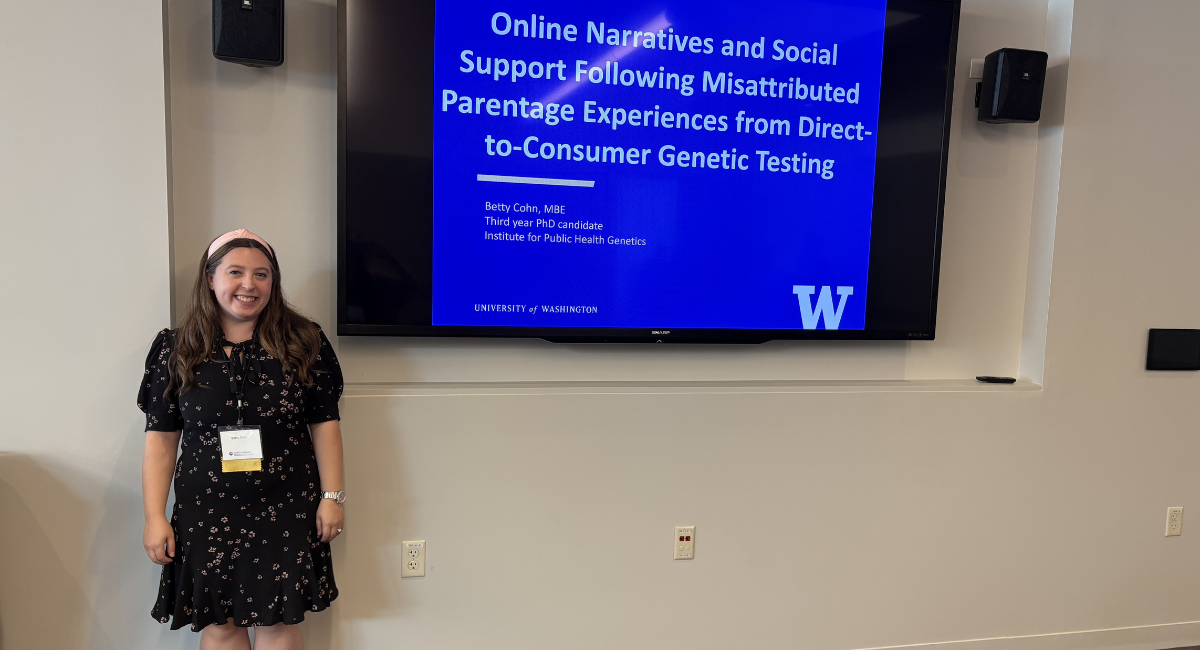
Cohn interviewed 27 people for her research about their experiences using a genetic test and discovering they were not biologically related to a parent. She said her interviewees fell into two groups based on their reactions to the news:
The first group, which was typically people ages 40-60, experienced feelings of trauma. “It was a complete and utter identity disruption,” Cohn said. “They felt like their parents betrayed them.” She said this group sought out social media sites like Reddit or Facebook groups to process the news with others who had gone through it. Sometimes these social networks were helpful and other times they led to fighting and distress due to the emotional weight of the conversations. This group also found podcasts on the topic to be helpful, comparing it to hearing from a friend who had gone through something similar. This group was more likely to seek therapy to process their emotions.
The second group, which was people around ages 70 to 90, felt acceptance around the test results. Cohn notes that these people's parents had already passed away, and their identity did not feel significantly impacted by the discovery. Cohn said one respondent compared the news to having a small home renovation; it did not impact the foundation or structure of their house. People in this group were not likely to seek out social media or therapy to process their results.
Understanding these reactions is important because historically in healthcare, providers who discovered a patient’s mistaken parentage did not share this news because they felt it would cause an unnecessary burden, Cohn said. Now, transparency is much more valued, and something people are seeking outside doctor’s offices with mail-in, at-home tests.
Based on her research results, Cohn recommends that genetic testing companies provide warnings about these types of results before patients decide to test, including how it could affect their family members. These companies should also offer resources for patients if they do get these results, Cohn said.
“People don't always think about genetics in the context of public health,” Cohn said. “Thankfully, UW does. We have this whole interdisciplinary program that Dr. Omenn helped create. So we're thinking about this, but hopefully more people start thinking about genetics in the context of public health as well.”
Cohn said receiving the Omenn Award for Academic Excellence is particularly meaningful, because Omenn, a former dean of UW SPH, helped launch and support the Institute for Public Health Genetics. It remains the only School in the country to offer a PhD in public health genetics.
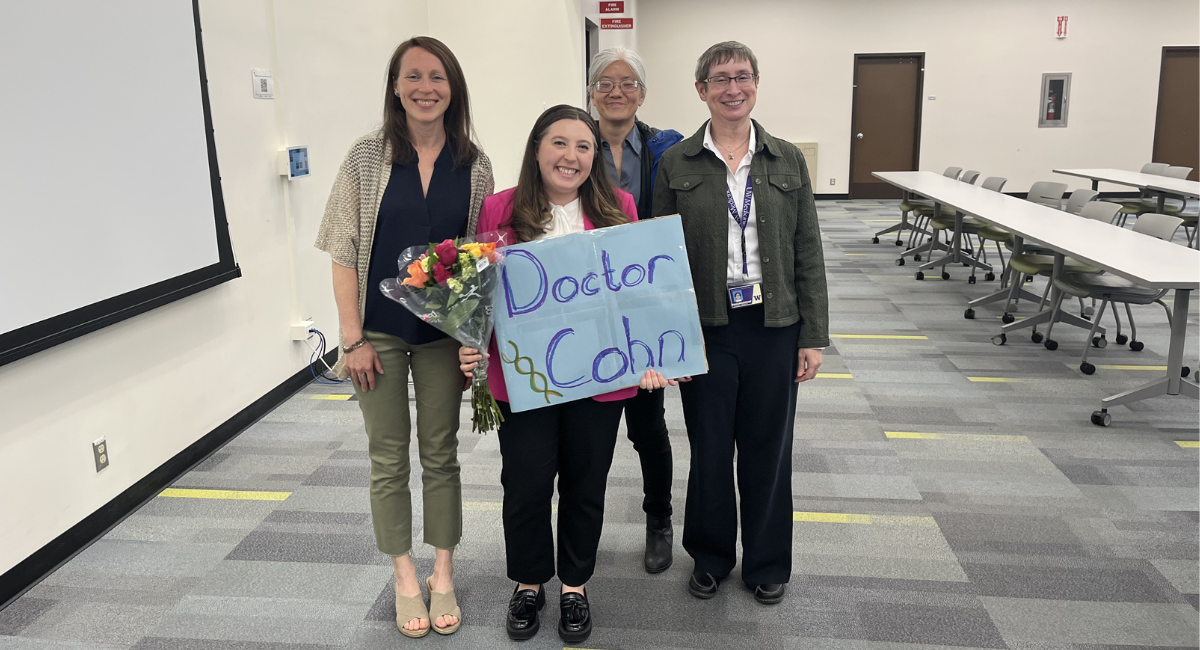
Cohn became interested in studying genetics after a high school biology class. While she initially wanted to work in genetic counseling, she wasn’t accepted into the programs she applied for. So she took another route, something she affectionately now calls a side quest. She began a master’s program in bioethics, and after loving the research process, began her doctorate at UW.
Her love of side quests, or detours along nonlinear life paths, is something she now strongly recommends for people both in and out of graduate school. They’ve inspired her despite challenges in her graduate career, including a hunt for funding every quarter for her doctoral work. Despite the challenges, Cohn is proud of her successes, and said some of the best projects have come from her eager and relentless outreach to people whose work she’s interested in. These collaborations have been part of Cohn’s eight publications, three teaching assistant positions, and three mentorship roles with undergraduate students.
Cohn calls herself the queen of the cold email, as she’ll send out an email to anyone she’s interested in working with, asking to learn more about their work. One time she saw a faculty member mentioned in a news article, and reached out. This connection led to a years-long partnership, that then led her to a postdoctoral opportunity at the University of Pennsylvania, which she’ll begin this autumn. Cohn will join a project researching the impact of mandatory National Institutes of Health neuroethics requirements.
“I never thought I'd be working on research that has to do with the brain, but a lot of the concepts are similar to the early things we were worried about with genetic testing, and gene editing, and so the things that I learned from UW, I can take with me,” Cohn said.