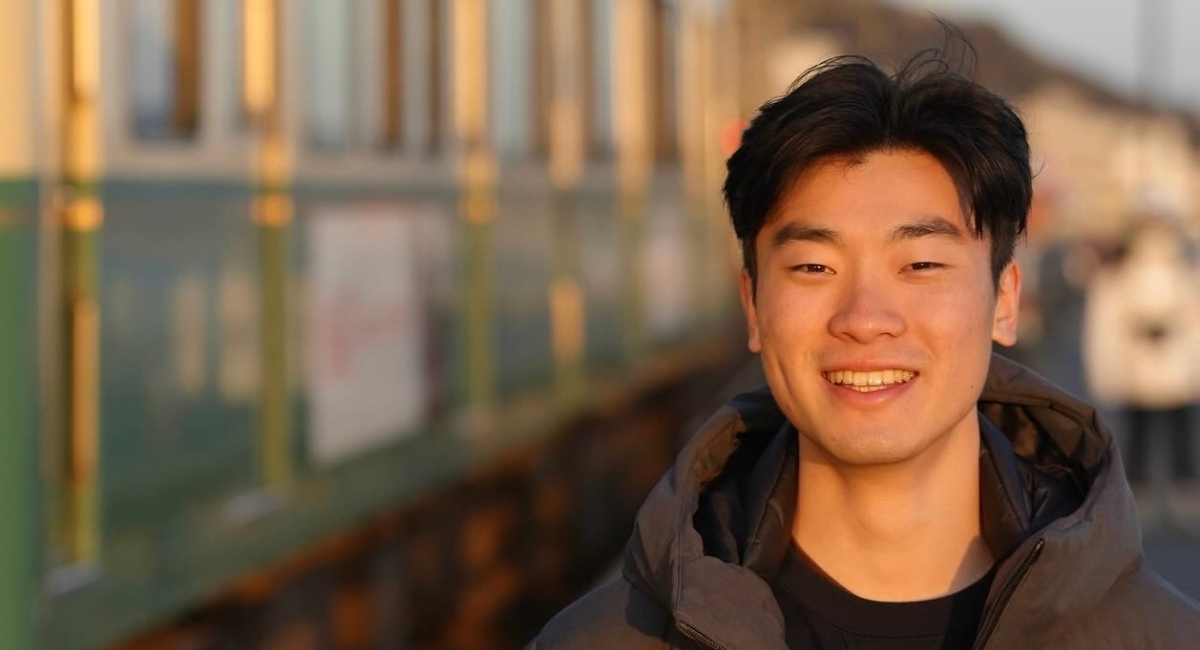
When Alden Gu began his undergraduate studies at the University of Washington, he looked for ways to collaborate with fellow students on solving public health challenges.
A class at UW on cross-sector collaboration for societal change would help shape his approach to solving those problems. There, he learned that society's most important challenges often span many disciplines, and equitably solving them requires collaboration amongst people from different backgrounds, sometimes with competing priorities.
Gu thought of all the complex public health issues he was learning about in his classes at the UW School of Public Health and was curious about how the answers could come from innovating with his fellow students, whether they studied engineering, business, arts, or history.
“I’m interested in how we can create these spaces that bring together stakeholders with vastly different backgrounds to collaborate on solving these difficult social issues,” Gu said.
Gu has been engaging with this question during his undergraduate studies in public health at UW. Through student-run clubs and competitions, Gu brings together undergraduates from across majors to learn and innovate on public health challenges, encouraging interest in public health topics. For his work, he is the inaugural recipient of the School of Public Health’s S. Rao and Usha Varanasi Endowed Fund for Undergraduate Student Research in Public Health, an award that supports students who engage in research that advances public health knowledge and practice.
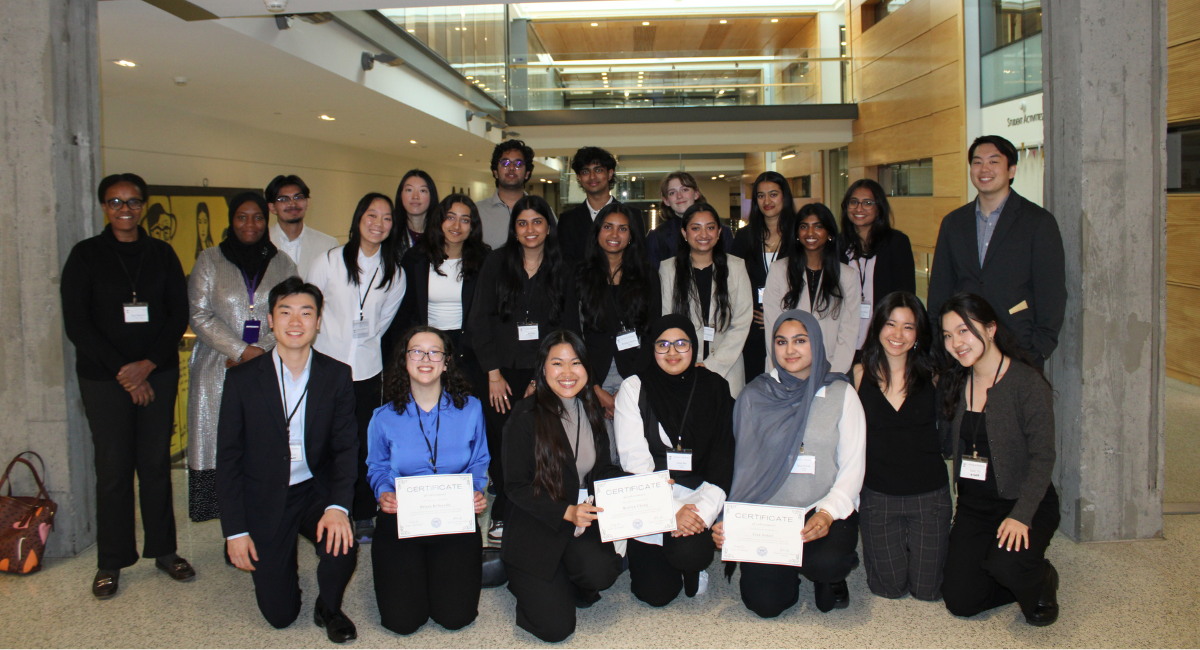
One of the ways Gu creates these collaborative spaces for students across disciplines is through the Public Health Case Competition. Developed in 2025 by Gu and his peer Emily Sui and managed by a team of eight students, the competition brings together undergraduates of all majors across Washington state to develop solutions for real and timely public health problems. The competition poses a specific challenge, and over the course of three months, cross-disciplinary teams of four to six students work together to research and develop innovative solutions, before a cumulative presentation in mid-April.
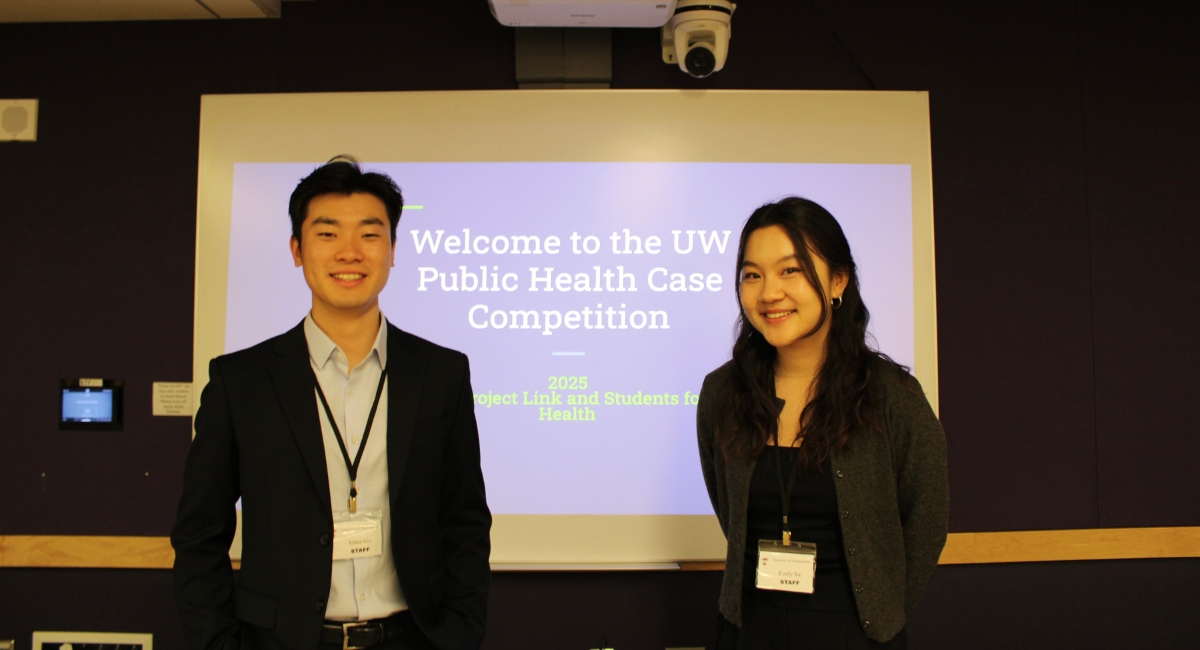
Now in its second year, the competition’s 2026 challenge focuses on the fallout from upcoming federal cuts to Medicaid funding. Competitors will consider how these federal cuts negatively impact Washington state residents, focusing on a specific population of their choice. Students will then develop a solution that mitigates those consequences, taking into account health care policies, medical research and data, social factors, financing, and feasibility.
Student teams are connected with mentors from organizations across Washington state, including from the Washington Department of Health, Public Health – Seattle & King County, and the state Governor’s office, who will support participants as they develop their solutions.
“A huge motivation for me in developing this case competition is that I wish something like this had existed when I arrived at UW.” Gu said. “As an underclassman, I looked for spaces where I could collaborate with students from different majors and backgrounds on projects with real social impact. It’s been incredibly gratifying to create this opportunity for future students.”
More than 300 students representing 13 colleges in Washington will participate across 62 teams in this year’s competition, engaging in public health conversations they might not have delved into before. 65 unique majors are represented, spanning the sciences, engineering disciplines, history, and the arts. Last year’s competition focused on infant mortality disparities by state, and Gu received feedback from some student competitors that they hadn‘t realized the extent of these public health inequities before.
Gu hopes the competition continues to not only raise awareness for critical public health issues but also empower students to collaboratively address them.
“We talk about these challenges often within public health, but meaningful, systemic changes in health care depend on greater public awareness and collaboration.” Gu said.
Gu’s own journey to public health began when he started volunteering with ABC’s for Global Health, a nonprofit organization that provides healthcare to rural Filipino communities. He conducted literature reviews for the organization to inform their work on malnutrition in rural areas. The more he worked with them, the more he was inspired by the nonprofit founder's dedication to public health. The founder had grown up in a rural area of the Philippines and, after earning her nursing degree, moved to the U.S. to get a medical degree, training she later used to lead the nonprofit.
This sparked Gu’s interest in global health, and before he arrived at the UW, he joined the student organization GlobeMed, now called Students for Global Health. When the original parent organization sunsetted, he helped redefine and shape the club’s current vision. As co-president, Gu now leads efforts to bring global health topics to students across campus. To do so, the group invites guest speakers who lead discussions on the intersection between public health and other topics like business or law. Students for Global Health also encourages both international and local engagement by fundraising for a partner nonprofit based in Odisha, India, and running volunteer events locally at women’s shelters, food pantries, and the UW Farm.
While Gu’s passion began in global health, he soon realized there were many domestic public health challenges he was also interested in addressing. In his public health classes, he learned about the breadth of public health issues that policy and research can address, as well as different tools and frameworks that can be used to tackle these health care challenges.
“The major has solidified the skills and tools required for public health work in the future, whether that be evaluation research, implementation science, or policy analysis and development” he said.
He is currently interested in the intersection between clinical medicine and public health policy, and is inspired by his professors who work both as medical practitioners and policy makers or researchers. He feels that clinical practice grounds him and keeps him connected to the communities he hopes to serve, while work in policy allows him to advocate for patients on a broader scale.
Gu said funds from the Varanasi Endowment help students like him innovate on public health research and practice challenges with other students. He sees important value in providing spaces for undergraduate students, who are exploring their academic curiosities, to be introduced to public health topics and engaged in research and practice.
“In a field largely underfunded and undervalued, support like this not only affirms that this work is worthwhile but also provides invaluable opportunities for passionate undergraduates to make meaningful contributions to public health,” he said.
Support Public Health Students
Private support for our students and faculty from our alumni and friends makes a difference. Join us as a donor today.