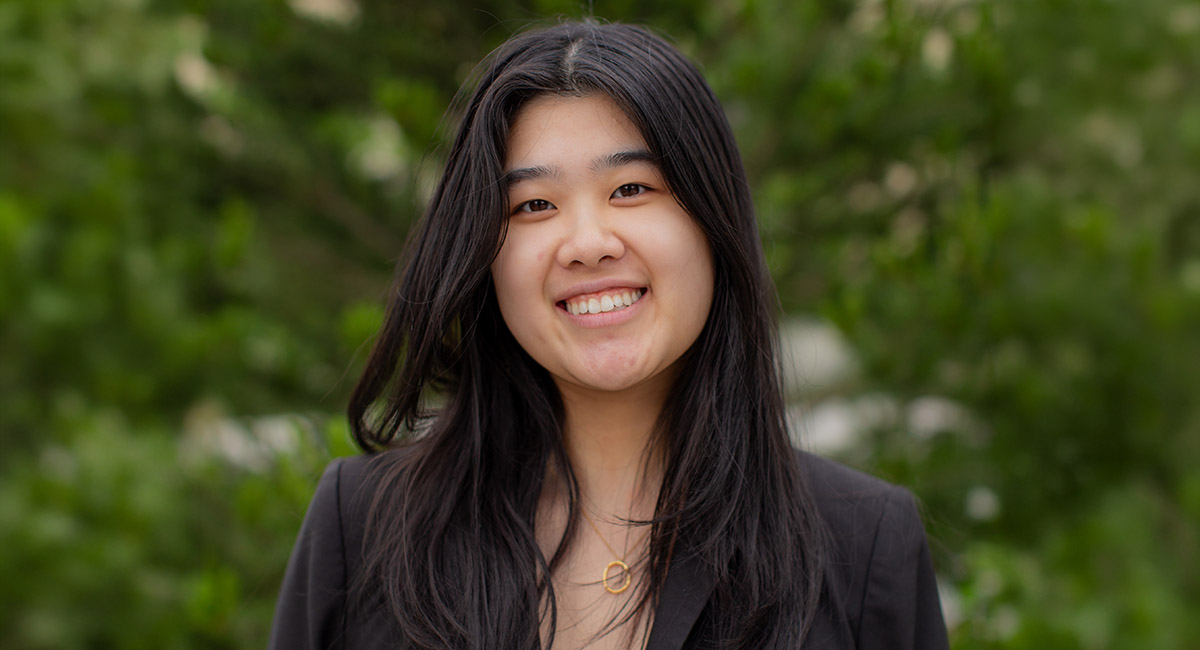
Daphne Suen is impatient for change.
She laughs as she explains this is why she wants to be a doctor, because as much as she loves her experiences in long-term public health research, she also wants to make a difference in patients’ lives right now.
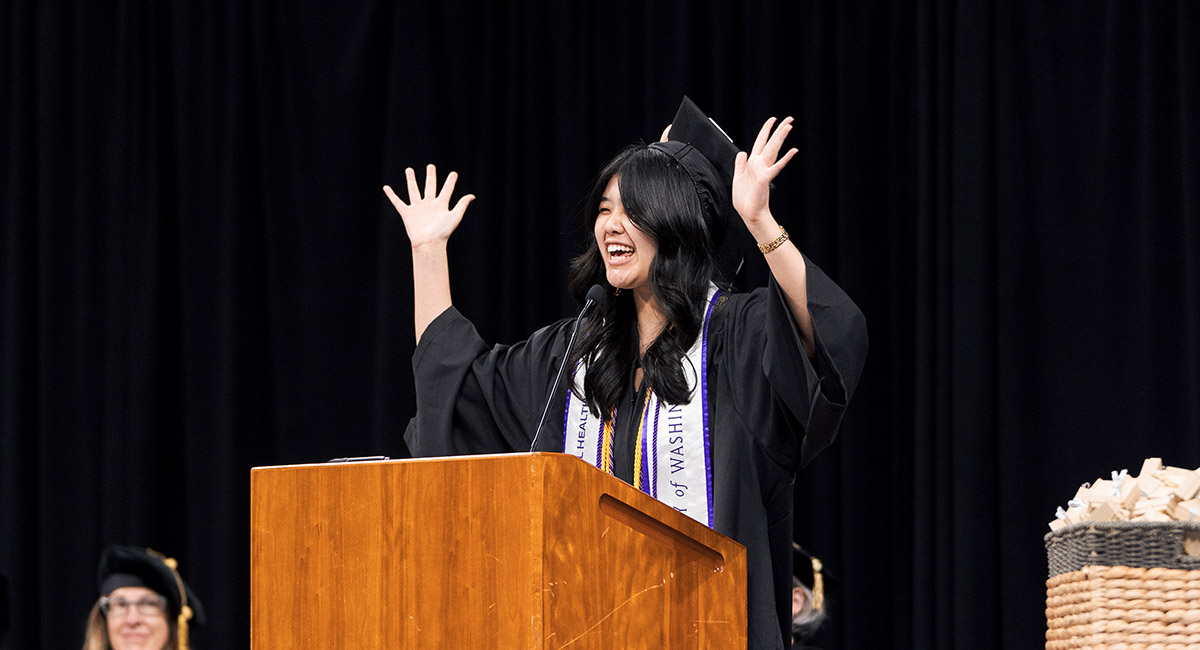
Suen is a graduating University of Washington senior and double major in Public Health-Global Health and Biochemistry. What Suen jokes is impatience is also a deep passion for social justice, health equity, and building a community of students who care deeply about making the world better with public health values. For this commitment, Suen is a 2026 recipient of the UW School of Public Health’s Outstanding Undergraduate Award.
“I think being in public health has taught me so many incredible values about social justice and health equity,” Suen said. “No matter where I end up, those values will always stick with me and will always guide my work, so I can feel confident implementing social justice initiatives and change in any field that I'm in.”
Suen was inspired to become a doctor after growing up in an immigrant family where she saw how health inequities impacted their access to healthcare in the U.S. Her grandparents, who primarily speak Mandarin and Vietnamese, had challenges accessing services without a translator. Her grandmother died from stage four colon cancer, but despite frequent trips to the doctor, was never recommended a colonoscopy. Due to language barriers, Suen felt frustrated and powerless at being unable to help, and wanted to make changes that improved communities’ diverse experiences with healthcare.
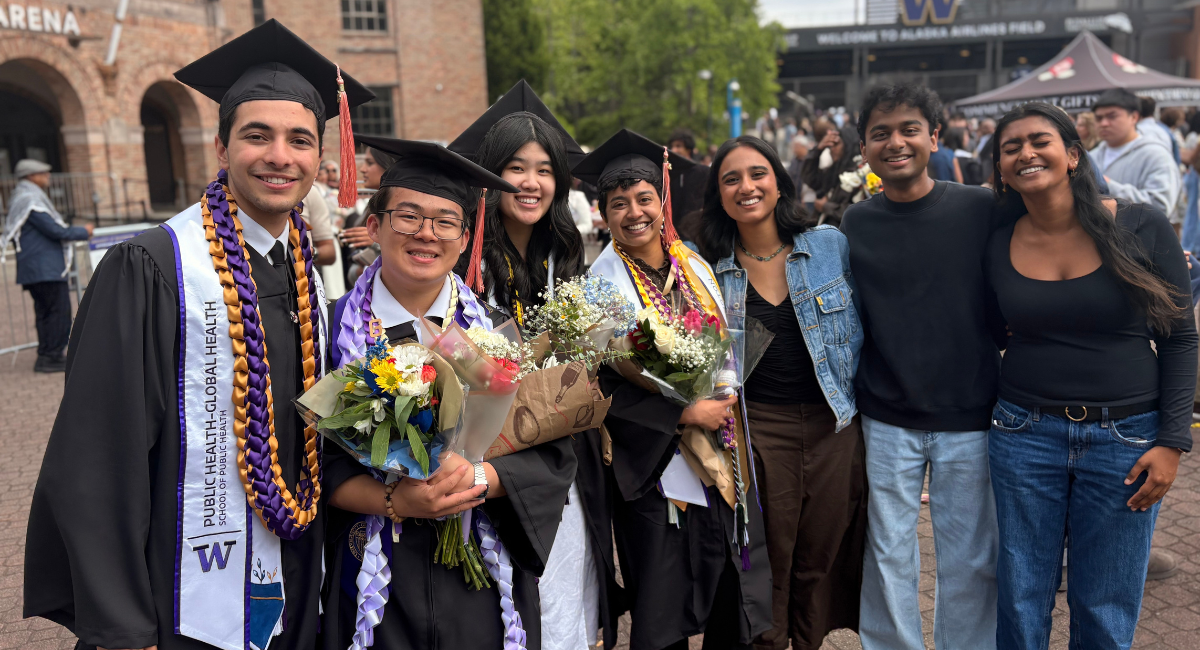
But Suen knows this work isn't something she can do alone. One of the best parts of her undergraduate experience has been the student communities she’s led and participated in that champion public health. She’s served as a Student Resource Coordinator for the Public Health-Global Health major for two years, which involved building community, leading equity programming, making affordable graduation stoles accessible for students, and hosting a graduation celebration for 120+ graduating students.
Suen was also an officer in the group Students of Color for Public Health, which hosts the annual Anti-Racism Community Health Conference, where students bring together public health professionals for discussions on how racism and white supremacy have caused detrimental health outcomes in communities. This year’s theme focused on resiliency of public health workers through changing social and political landscapes, and how to support the next generation of public health professionals.
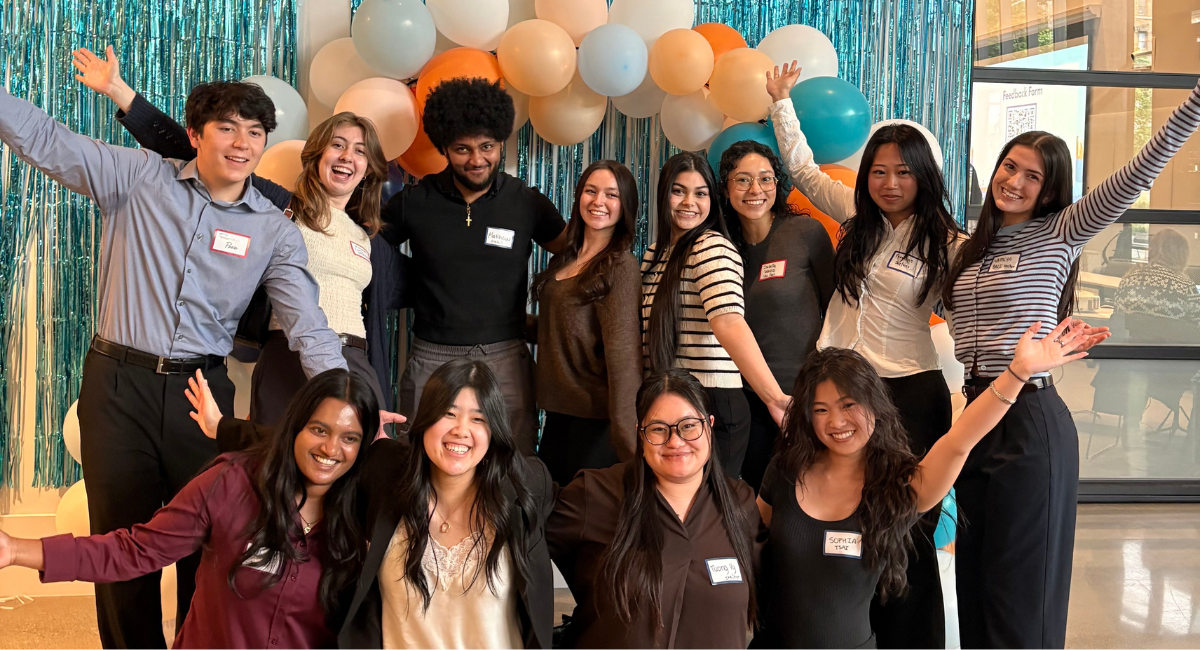
Suen also launched a project in partnership with the UW/Fred Hutch Center for AIDS Research, to encourage more undergraduates from underrepresented backgrounds to engage in research. Throughout the two years of this project, 24 students were connected with a research mentor to work on projects ranging from a literature review on establishing a community advisory board for people living with HIV who also use substances to mpox vaccination efforts through social media, zines, and interviews. Suen, who has been involved in epidemiology research on transgender health during her time at UW, wanted to help the research space feel more welcoming and inviting to students. To get their feedback on how the work is going, Suen holds gatherings and entices student attendance with strawberry cake and mango sago.
“I'm so proud of our collective work, because now the group is in its second year of these projects and the students love it,” Suen said. “I think the work that they've done of community engagement, of literature reviews, has inspired a lot of them to want to go into research in the future in some capacity.”
Just as Suen wants to create welcoming communities for students, she also wants to create inclusive spaces for her patients as a physician. During her time at UW, she has been inspired by the physicians she’s met who prioritize their patients’ holistic health. Some of those include a physician who is working to make national guidelines for how to create inclusive care for trans patients who are pregnant, and the doctors in Seattle’s community health centers who not only treat physical health, but also connect patients with education, jobs, and housing services during a clinic visit. All of the medical schools she is applying for center health equity in their education.
“Health spans way beyond hospital walls,” Suen said. “It is governed by all sorts of social inequities that we all have a responsibility to change. How can we build our physicians to be strong social justice advocates for patients?”
During the past few years as public health has been defunded across the country and mistrust has grown, Suen and her peers have found it challenging to stay hopeful. She remembers reading a book on the economic impacts of racism, and feeling demoralized by the long list of problems and the small list of solutions.
But the thing that inspires her is watching her peers continue to make small impacts, whether that’s through a research project, a conversation at a public health conference, or an educational public health social media video.
“The impact doesn't need to be big for it to be valuable,” Suen said. “While it does seem really rough to think about all of the problems, I'm really grateful that I've had the opportunity in my undergraduate career to think about solutions, and to try and implement them.”