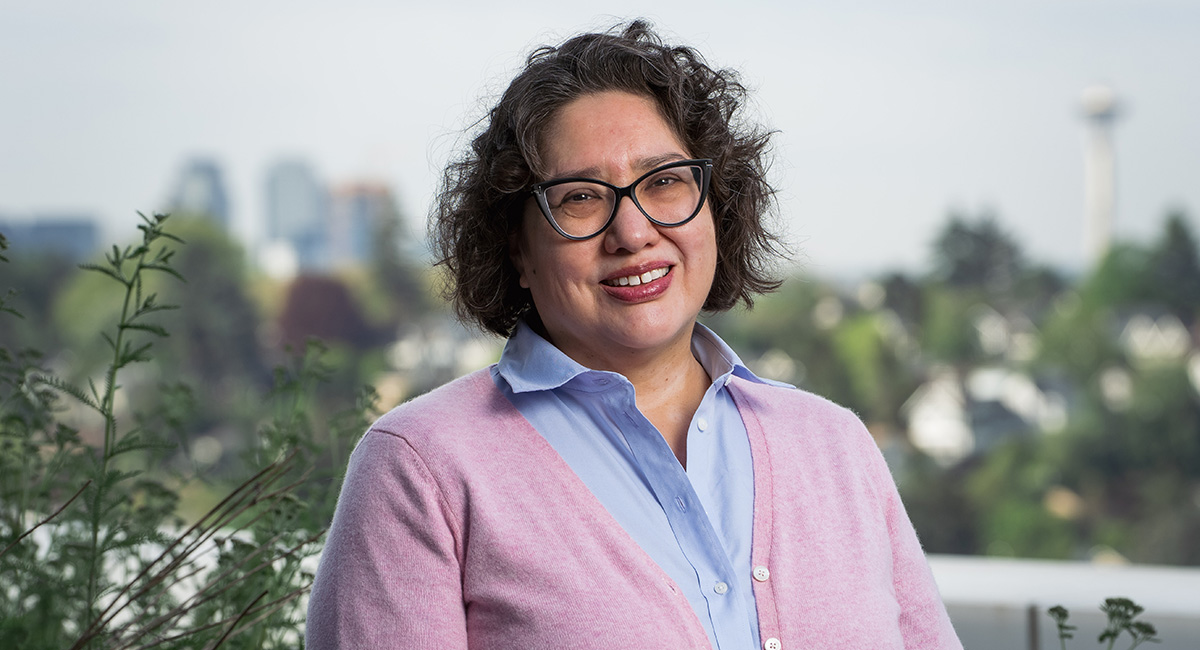
As a four-year-old growing up on the Fort Berthold Indian Reservation in North Dakota, Myra Parker would watch as her grandmother took a syringe and injected it into an orange. She was practicing giving an insulin shot, which her grandmother had to self-administer for diabetes. Parker, an enrolled member of the Mandan and Hidatsa tribes, didn’t know what public health was at that time. But she knew that, like her grandmother, many adults in her community also were diagnosed with diabetes, and she wanted to change that.
At the time Parker began her career in public health, very little data was collected on American Indian and Alaska Native health issues. But years later, thanks to the determination of Parker and dozens of her Indigenous public health colleagues, this has changed. Together they’ve led efforts to build coalitions and provide data collection tools for tribes to understand and improve health outcomes from opioid addiction to colorectal cancer.
For her dedication to improving Indigenous public health, Parker was named the 2026 Alumni of Impact Awardee, the highest honor given to alumni from the University of Washington School of Public Health. Parker, a 2010 Health Services doctoral graduate, will address the class of 2026 at the School’s Graduation Celebration in June.
“Be determined, care for yourself, and care for your community,” Parker advises graduating students. “It takes everyone's effort, and it takes all of us collaborating and working together to address these complicated public health issues.”
Parker’s passion for improving the health of Indigenous communities has fueled her career. As an associate professor of psychiatry and behavioral sciences at the UW School of Medicine and adjunct faculty in the Schools of Public Health and Social Work, and the Department of American Indian Studies, she studies culturally tailored health interventions for American Indians and Alaska Natives on topics ranging from substance abuse, parenting, and mental health.
She also serves as the director of Seven Directions, the first national public health institute in the United States to focus solely on Indigenous health and wellness.
“I'm constantly trying to create opportunities to share the knowledge that we're gathering with tribal communities so that they can then operationalize it and put it to work for their community,” Parker said.
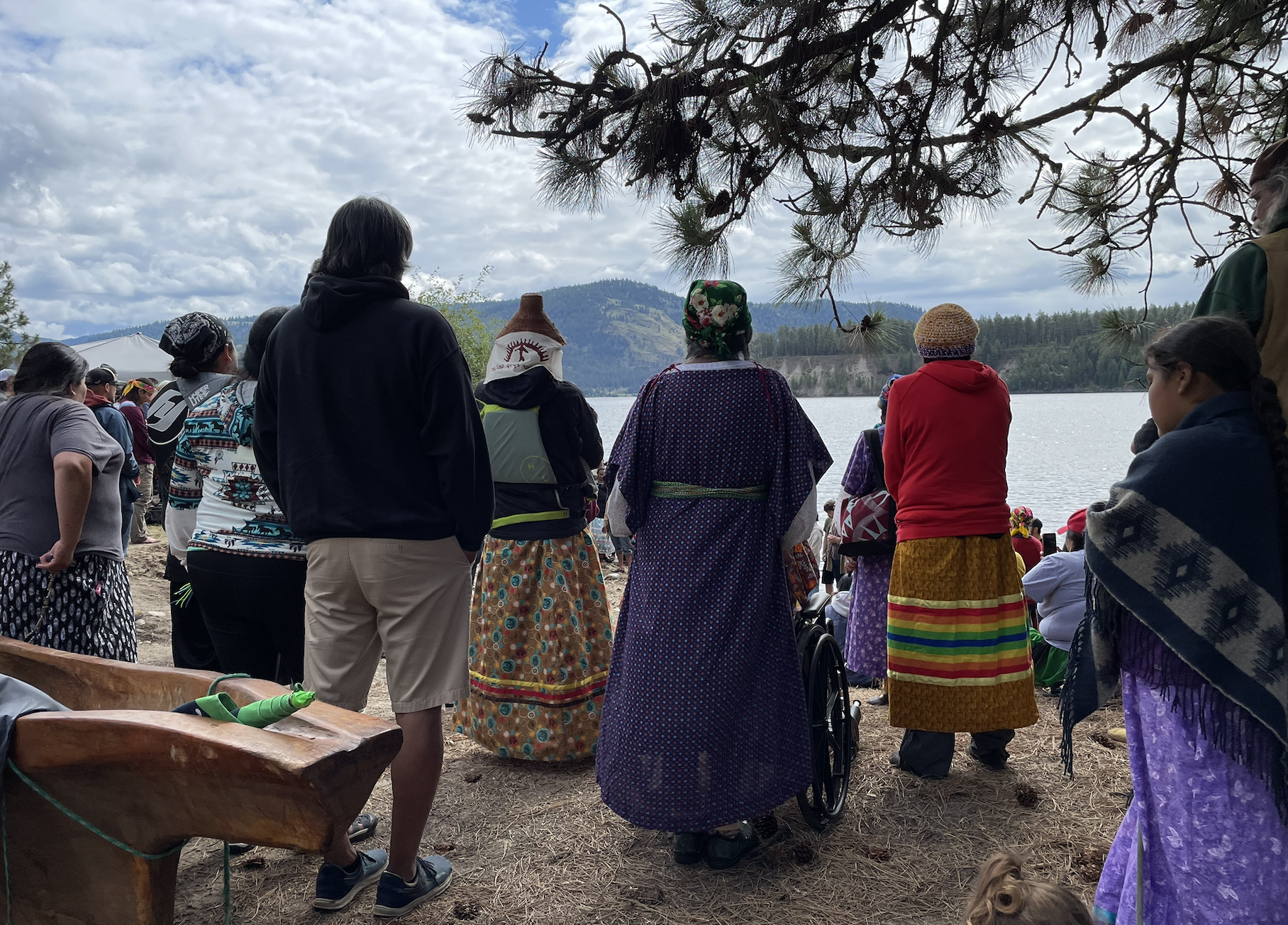
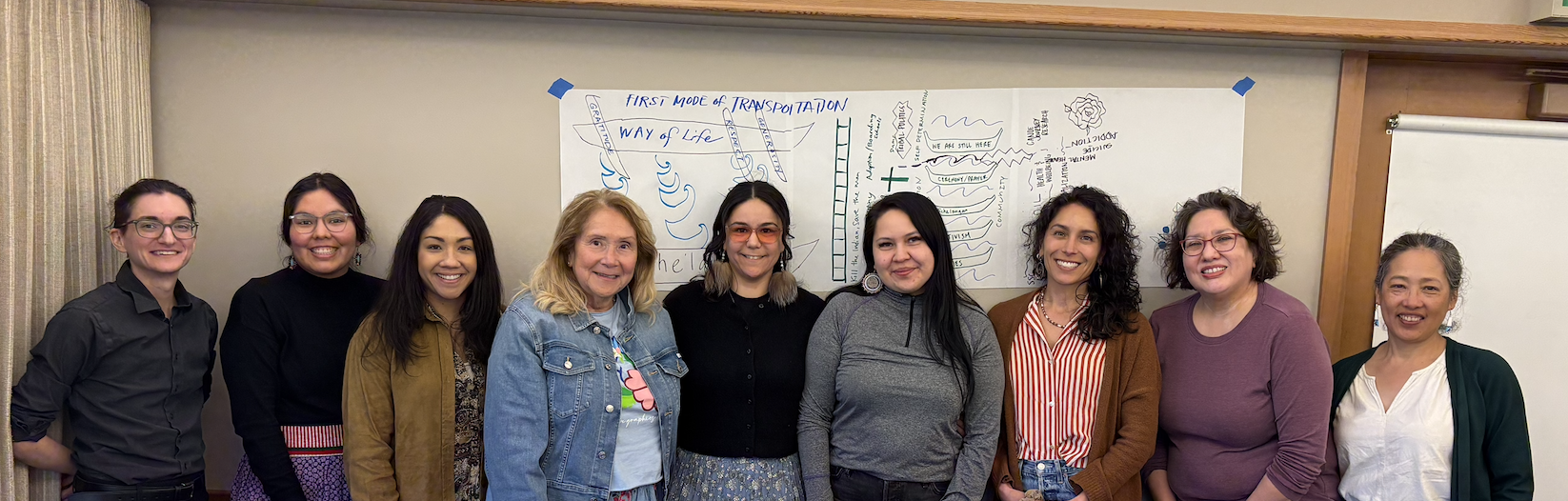
Over the past eight years, Seven Directions has grown from a small team of four to nearly 30 team members who are located in Washington State, Hawaii, Arizona, and Nevada. The Seven Directions faculty, staff, and student workers all contribute in the development of public health tools that can be applied directly in tribal and urban Indian communities. The Indigenous knowledge used to develop culturally tailored tools stems from tribal and urban Indian community members who share their insights, practice-based evidence, and traditional approaches to create content that can go right back to their communities.
Parker said Seven Directions’ biggest achievement is its creation of the Indigenous Evaluation Toolkit to support Indigenous groups in improving health and wellness in their communities. Funded by the U.S. Centers for Disease Control and Prevention, the toolkit provides a primer for adopting Indigenous approaches around evaluation.
One of the challenges many tribal and urban Indian communities share are the evaluation requirements set forth by funders. The toolkit provides an approach to establish the legitimacy of Indigenous knowledge and science for the purpose of applying Indigenous evaluation approaches and translating them into Western evaluation language. This approach supports the use of culturally tailored methods that involve Indigenous perspectives and knowledge yet still ensures American Indian and Alaska Native communities meet funding requirements that focus on western evaluation tools. The outcome of these evaluations can be shared with funders to seek support for improving Indigenous health programs.
Since its publication in 2023, the toolkit has been accessed thousands of times. While the toolkit was initially created to address opioid prevention programming, Seven Directions has published additional toolkits on suicide prevention, driving under the influence, and adverse childhood experiences. Parker said communities are also adapting the toolkits to address cancer rates by evaluating screening methods for breast cancer or colorectal cancer.
“It's exciting to see this taking off and being applied in different ways across different communities,” Parker said. “We’re continuing to build content so folks can find ways to make it applicable in their own settings.”
Parker’s passion for using data to improve health began early in her career, as she explored how to make an impact on Indigenous health. But before that, it was hard to find her footing. She discovered she wasn’t passionate about working directly with patients in a healthcare setting. At the same time she’d been dissuaded from a career in research by people who said she couldn’t study Indigenous health without bringing her own bias. She didn’t know any Indigenous researchers and not having that representation made her wonder where she fit.
Soon she discovered a field she loved. At the Inter Tribal Council of Arizona, she worked on health policy alongside mentors John Lewis of the Colorado River Indian Tribes Reservation, and Alberta Tippeconnic, a member of the Navajo Nation.
“A lot of their approach is what I still use today, which is we have to put the information, the knowledge, and the tools into tribal communities, so they can make use of them,” Parker said.
Parker then became one of the first research coordinators to work on the Native American Research Centers for Health grant funded by the National Institutes for Health, where she said she was exposed to giants in the field of American Indian public health, including Yvette Roubideaux, Rosebud Sioux Tribe, who went on to be the director of the Indian Health Service, and Jennie Joe, Diné, who conducted cancer research.
During a career at the Arizona Governor’s office as a tribal policy liaison, Parker saw how health disparities that Indigenous communities faced stemmed from lack of access to jobs, quality education and housing. She observed how a lack of data on these issues prevented leaders from developing a comprehensive solution for these problems because a detailed picture of the impact was not available.
Having these experiences led Parker to understand the urgent need for Indigenous health research, and the possibility of improving Indigenous health data. Parker began her studies at the UW School of Public Health's doctoral program in Health Services, which she credits as foundational to the public health work she’s accomplished.
In the program, Parker learned how to develop surveys, how to interrogate whether a question was going to produce valuable information, and how the data from these surveys should be gathered, cleaned, and analyzed.
“Health Services put together all of the fundamental building blocks for me in thinking about how we collect this data,” Parker said. “It was so needed because there really weren't national surveys that were widespread that collected data around American Indian and Alaska Native health issues. I've turned back to that training literally every day.”
Parker is now able to share the importance of studying Indigenous public health with undergraduate and graduate students, connecting health disparities like the diabetes she watched her grandmother and community struggle with to social determinants of health specific to American Indian, Alaska Native, and other Indigenous communities. Parker teaches an Indigenous health class at the School of Public Health, which is now in its sixth year.
Students from different colleges and majors have taken the course, which covers historical and policy impacts on the health of American Indian and Alaska Native communities, culturally grounded health interventions, and the interplay of protective factors that support health across the 575 federally recognized tribal communities. Parker said students have been able to apply their learnings on Indigenous public health to their own communities.
“I'm hoping that students from the class are going to be lifelong learners,” Parker said, “That they're going to continue to invest in themselves and invest in their communities, wherever they end up in their professional careers.”