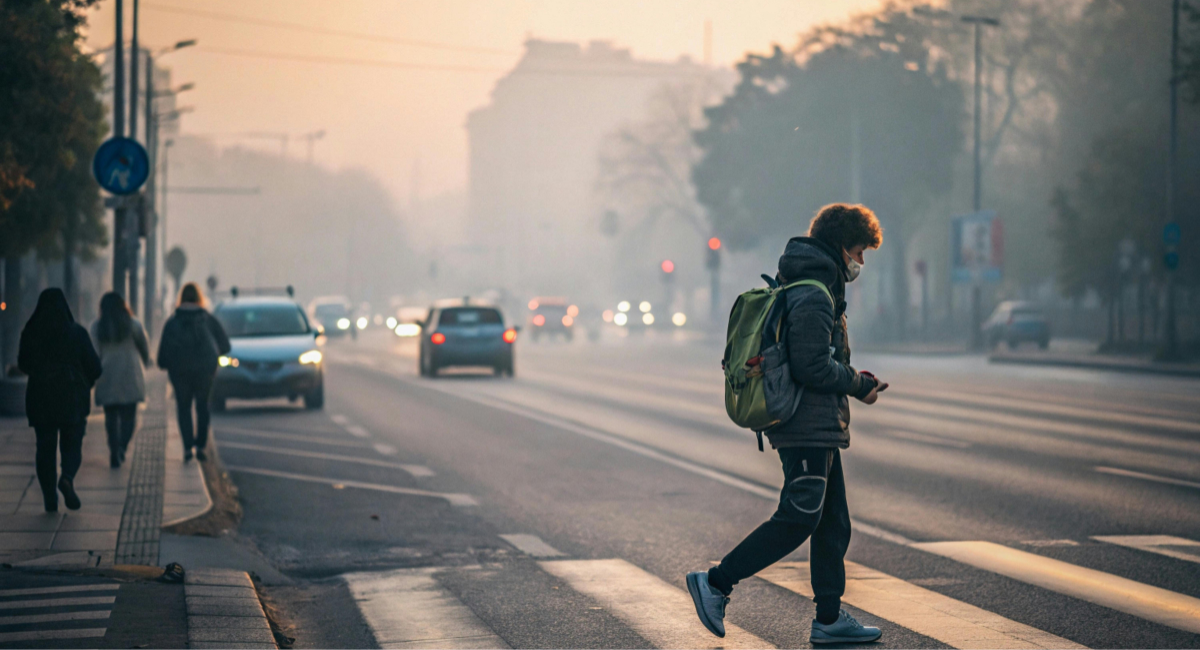
When a patient visits their doctor for a routine exam, they may be asked about their diet or physical activity to assess their health. But they may not be asked about whether their job or home leaves them vulnerable to wildfire smoke or heat waves.
This is a problem because as climate change fuels extreme weather events, heat and smoke are increasingly having an impact on people’s health, leading to cardiovascular and respiratory diseases and death.
A new toolkit developed by University of Washington Master of Public Health student Carolyn Graham helps make these conversations more common in health care settings. The toolkit is designed for health care professionals to assess and protect their patients’ health amidst extreme heat and smoke events.
Graham created this toolkit as part of her MPH practicum at the Foundation for Health Care Quality, a Seattle-based nonprofit that partners with health providers to improve clinical care. The toolkit is currently being used in health care settings to inform internal documents for clinicians. Graham led a webinar to show how health professionals – from doctors to community health workers – can use the toolkit with their patients, and these resources are being shared through newsletters, meetings and conferences.
“I liked that this practicum opportunity was taking the research that other people have done on the health impacts of extreme heat and wildfire smoke and turning them into a tool that could have an actual impact on public health,” Graham said.
Graham specifically worked with the Bree Collaborative arm of the Foundation for Health Care Quality. The Collaborative is a public-private group created by a 2011 Washington state statute to create clinical and policy guidelines that improve health care services with patient safety issues, poor outcomes, high cost, or unneeded variation. The Collaborative has addressed areas like C-sections, end-of-life care and opioid prescribing. High temperatures and wildfire smoke were part of this improvement work. After the Collaborative created guidelines for how health professionals could keep people safe during high temperatures and wildfire smoke, Graham was able to turn those guidelines into a practical tool.
“The toolkit helps bridge that gap between telling people what to do, and then giving them the tools to do it, so that clinicians and other partners like health insurance plans, can help people where they're at,” said Ginny Weir, CEO of the Foundation for Health Care Quality and Graham’s site supervisor.
This tool is especially helpful for populations that are more susceptible to the health impacts of smoke and extreme heat. Outdoor workers, the elderly, people with asthma or heart conditions, and low-income communities are more at risk during heat waves or smoke.
The toolkit utilizes a flow-chart to help health care providers quickly assess a patient’s health risk and jump to resources to share. It also helps providers and patients co-create action plans for wildfire smoke or extreme heat events. These plans include steps like determining the safest place they can stay, what supports they might need for current health conditions that could be exacerbated by these events, and further emergency planning such as how to pivot when the power goes out.
The toolkit also brings together currently existing resources from universities and health departments, many of which are available in multiple languages. These include resources on how to build a low-cost air filter to protect people from wildfire smoke, how to identify and treat heat illness, and how to monitor air quality and take appropriate steps to stay safe.
Graham was interested in exploring the impacts of extreme weather on public health after her own experiences growing up in Missoula, Montana. An avid hiker, Graham noticed that time spent outdoors in the summer months was increasingly being impacted by wildfires and extreme heat events. The respiratory and cardiovascular risks from heat or smoke drive many people indoors, keeping them from recreational activities.
“It was exciting to work on a practicum that addressed the health impacts of these climate change-driven events since it’s something that has been of personal interest for a while,” Graham said.
Graham received an undergraduate degree in biomedical engineering because of her love for math and health, but she wanted to find a way to use her passions to have social impact. After an AmeriCorps service term as the health education coordinator for the Samuel E. Kelly Ethnic Cultural at UW, Graham decided to pursue an MPH in epidemiology at UW.
She wants to use the research and practice skills from her master’s degree to understand how to improve health and then implement those findings in useful ways with communities. Graham hopes to do this by exploring how climate-driven events impact how people interact with their outdoor spaces, and the role of public health recommendations during these events.
“I want to be able to use my research to lead actual implementation and public health education, policies and interventions,” Graham said.
MPH Practicum Symposium
Join us for the 28th annual MPH Practicum Symposium April 8, 2025, 3 – 5 PM in the HUB Ballroom.